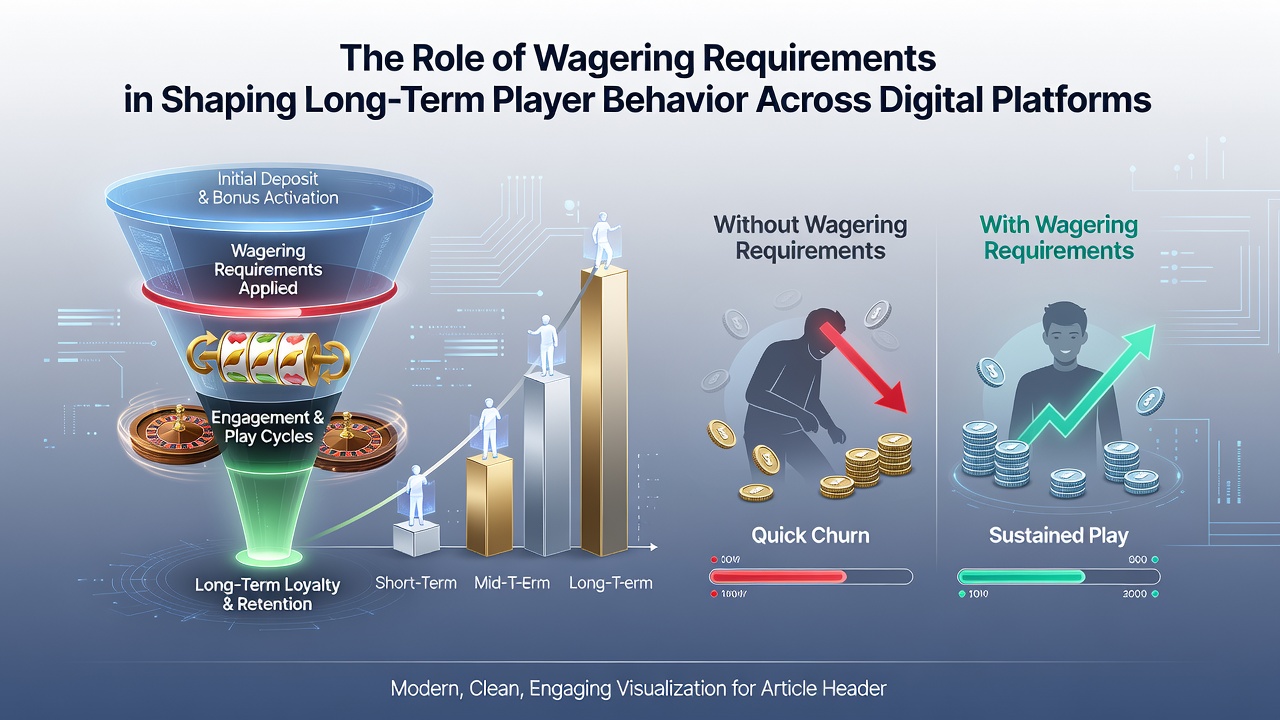
Wagering Requirements and Their Effects on Long-Term Engagement Patterns Among Digital Platform Users
Digital platforms incorporate wagering requirements as standard conditions attached to promotional offers, and these rules dictate how much players must stake before accessing any winnings from bonuses. Operators set these thresholds at multiples like 20x or 40x the bonus amount, which directly influences how long users remain active on a given site. Data from industry reports shows that higher requirements correlate with extended session lengths across multiple user cohorts, while lower thresholds often produce quicker withdrawals and reduced return visits.
Core Mechanics Driving Repeated Play
Players encounter wagering requirements immediately upon claiming a deposit match or free spin package, and the system tracks every bet against the total needed to clear the condition. Research indicates that users adjust their betting patterns to meet these targets, often selecting games with higher contribution rates such as slots over table games that count at reduced percentages. This adjustment process creates predictable cycles where individuals return daily or weekly until the requirement reaches completion, according to behavioral analytics gathered by platform operators.
One study revealed that participants who faced 30x requirements maintained accounts for an average of 47 days longer than those facing no such conditions, because teh obligation compels continued interaction with the platform interface. Observers note that these mechanics function similarly across mobile apps and desktop versions, yet mobile users show slightly higher completion rates due to push notifications that remind them of remaining progress.
Regional Regulatory Approaches Shaping Outcomes
Authorities in various jurisdictions impose caps or disclosure rules on wagering requirements to protect consumers. The Nevada Gaming Control Board requires clear labeling of all playthrough terms before any bonus activation, and similar transparency measures appear in Canadian provincial frameworks administered by bodies like the Alcohol and Gaming Commission of Ontario. In Australia the National Consumer Protection Framework sets maximum multipliers that operators must follow, which has led to documented shifts in player retention metrics since implementation.
European markets outside the UK have introduced their own standards through the Malta Gaming Authority and comparable entities, where data collected through 2025 demonstrates that capped requirements reduce the incidence of extended loss-chasing sessions. Figures from these sources reveal that platforms operating under stricter limits experience steadier but less volatile user bases over multi-month periods.
Behavioral Patterns Observed in Longitudinal Data
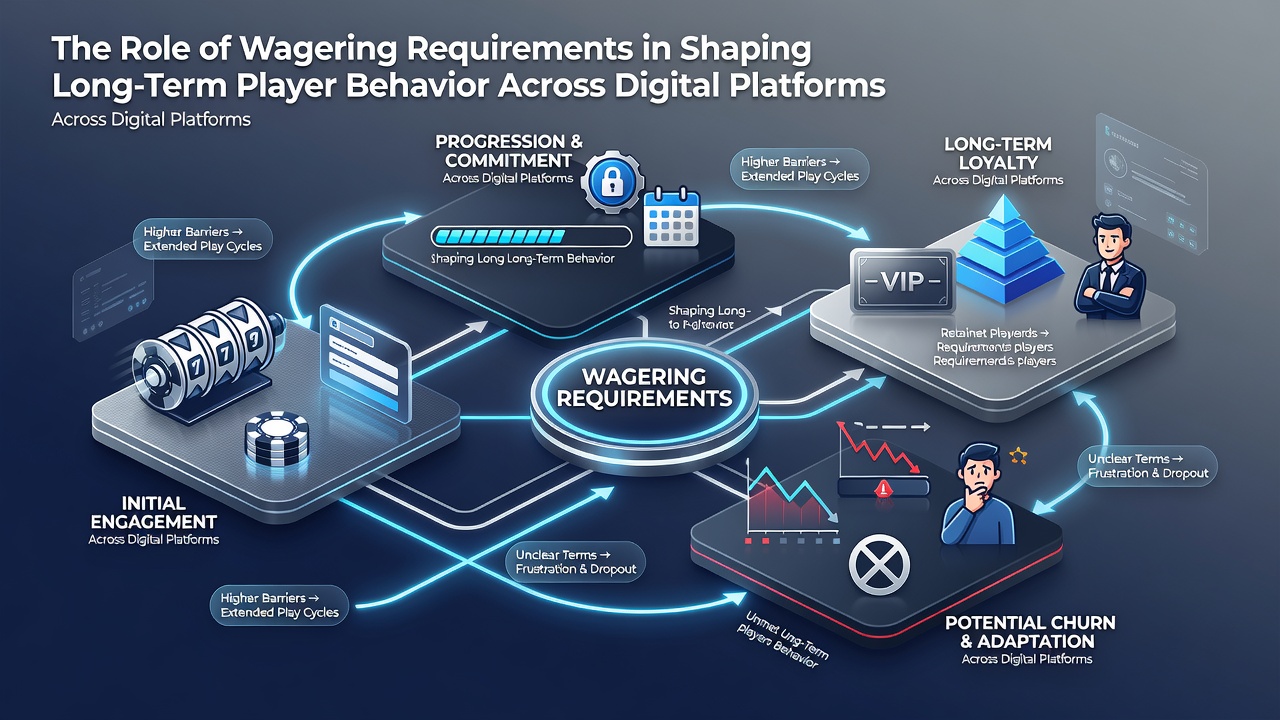
Long-term tracking of player accounts shows that wagering requirements influence not only immediate activity but also churn rates and lifetime value calculations. When requirements exceed 50x, many users abandon accounts before completion, whereas moderate levels around 25x encourage steady engagement without triggering abrupt exits. Researchers at academic institutions have mapped these trends using anonymized transaction logs, finding that completion success rates hover near 35 percent across large sample sizes.
September 2026 brought updated reporting from several international gaming associations that highlighted seasonal variations, with higher requirement fulfillment during holiday periods when users allocate more leisure time to platforms. These patterns hold across different age groups, although younger demographics tend to favor faster-paced games that accelerate progress toward clearance while older cohorts spread activity across multiple weeks.
Platform Design Adjustments and User Response
Operators respond to observed behaviors by tweaking contribution percentages for specific game types and introducing progress trackers that display real-time status. Such features reduce frustration and support continued play, according to internal metrics shared in trade publications. Players who receive these visual cues demonstrate lower dropout rates during the final stages of a requirement, when remaining stakes often feel most daunting.
Cross-platform comparisons indicate that sites integrating social elements or loyalty tiers alongside wagering conditions retain users at higher rates than those relying solely on the requirements themselves. Data shows that combining these elements creates layered motivations where social recognition supplements the core obligation to complete playthrough targets.
Conclusion
Wagering requirements continue to serve as central tools for managing engagement across digital gambling environments, and their calibration directly affects how long players interact with any single platform. Regulatory bodies from multiple regions maintain ongoing oversight while researchers compile increasingly granular datasets that reveal consistent connections between requirement structures and sustained user activity. These dynamics remain central to platform strategy as markets evolve through 2026 and beyond.