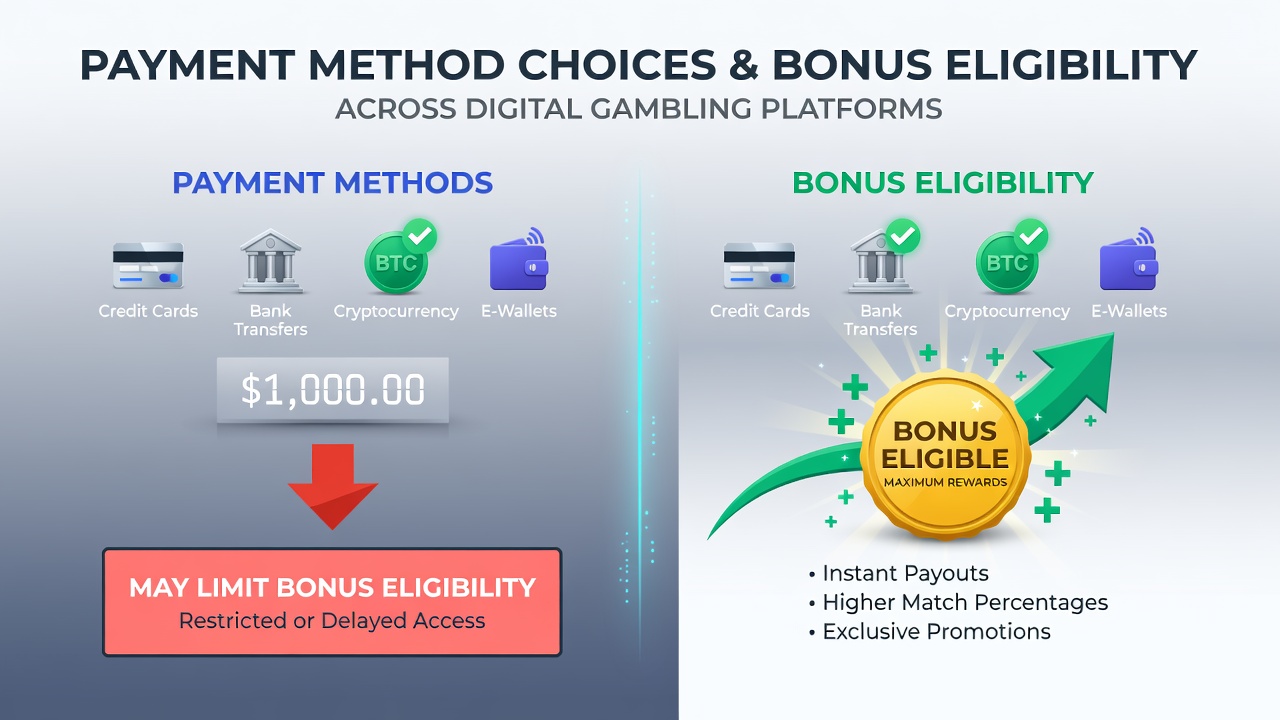
Payment Method Choices Influencing Bonus Eligibility on Digital Gambling Sites
Payment methods play a direct role in determining whether players qualify for promotional offers across digital gambling platforms, and this connection has grown more pronounced as operators refine their terms in response to regulatory shifts and technological changes. Credit cards, bank transfers, e-wallets, and cryptocurrency each carry distinct eligibility rules that can either unlock or restrict access to welcome bonuses, reload offers, and cashback programs. In August 2026, platform operators continued to adjust these policies amid evolving compliance requirements from multiple jurisdictions.
Common Payment Categories and Their Typical Restrictions
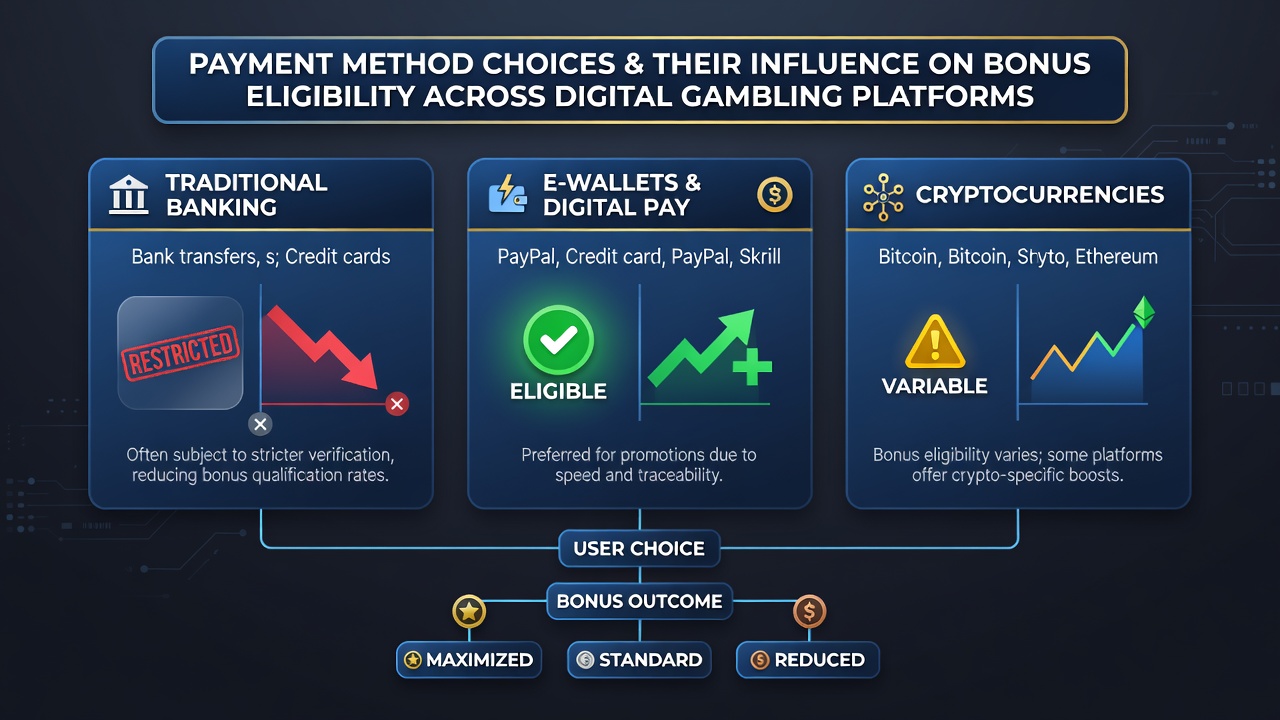
Operators frequently exclude certain e-wallet services from bonus calculations because those methods allow quick deposits and withdrawals that reduce platform revenue from prolonged play. Skrill and Neteller deposits, for instance, often fail to contribute toward wagering requirements on many sites, whereas Visa or Mastercard transactions usually receive full credit toward bonus activation. Bank wire transfers and certain prepaid vouchers may qualify fully in some regions yet trigger delays that affect time-sensitive promotions.
Cryptocurrency options such as Bitcoin and Ethereum have expanded eligibility pathways on platforms licensed in jurisdictions that recognize digital assets. These methods sometimes receive preferential bonus multipliers because transaction fees remain lower and verification processes move faster, yet they also introduce volatility considerations that operators address through specific clauses in their terms.
Regional Regulatory Frameworks Shaping Eligibility Rules
Jurisdictions impose varying standards that indirectly influence how payment methods interact with bonus structures. The Australian Communications and Media Authority has documented how licensed operators must disclose payment exclusions clearly, and this transparency requirement affects which deposit types receive promotional credit. In contrast, Pennsylvania's gaming oversight body maintains separate guidelines that permit broader acceptance of e-wallets while still requiring operators to list ineligible methods upfront.
North American Examples
New Jersey and Michigan platforms demonstrate how state-specific rules create differences in bonus eligibility tied to payment selection. Operators in these markets often allow credit card deposits to unlock full bonus amounts, while restricting certain digital wallet transactions to deposit-only status without promotional add-ons. Data from the Pennsylvania Gaming Control Board shows consistent patterns where players using approved bank transfers maintain higher qualification rates for ongoing promotions compared with those relying on instant e-wallets.
Impact on Wagering Requirements and Conversion Rates
Payment choice affects not only initial bonus receipt but also the speed at which wagering requirements convert into withdrawable funds. Deposits made via methods that carry higher processing fees sometimes receive adjusted contribution percentages toward playthrough targets, which extends the time needed to clear bonuses. Platforms track these metrics internally and adjust eligibility thresholds accordingly, creating situations where two players depositing identical amounts through different channels face divergent bonus outcomes.
Studies from research institutions tracking player behavior indicate that cryptocurrency users on compliant platforms achieve bonus conversion at slightly higher rates due to reduced intermediary fees and quicker confirmation times. These findings align with broader industry reports showing that payment method selection correlates with both bonus uptake and retention statistics across multiple licensed markets.
Platform-Specific Policies Emerging in 2026
Many operators now publish detailed payment method matrices that outline exact bonus eligibility percentages for each option. These tables list contribution rates for Visa, Mastercard, various e-wallets, bank transfers, and digital currencies, allowing players to compare options before depositing. Such transparency stems from regulatory pressure across multiple regions and has become standard practice on sites operating under international licensing frameworks.
Some platforms apply tiered bonus structures where certain payment methods unlock enhanced offers unavailable through standard channels. For example, direct bank transfers may qualify for higher match percentages during promotional windows, while instant e-wallets receive standard terms only. These differentiated approaches reflect operators' efforts to balance player acquisition costs with compliance obligations.
Conclusion
Payment method selection continues to function as a key variable in bonus eligibility determinations across digital gambling platforms. Operators maintain detailed policies that link deposit type to promotional access, and regulatory bodies in various jurisdictions enforce disclosure requirements that make these connections visible to users. As of August 2026, these patterns show no sign of simplification, with platforms continuing to refine eligibility criteria in line with regional rules and technological developments in payment processing. Players benefit from reviewing each site's payment matrix prior to depositing, since the chosen method directly determines available bonus structures and wagering pathways.