How Layered Welcome Incentives Reshape Retention Trends at Bingo Sites
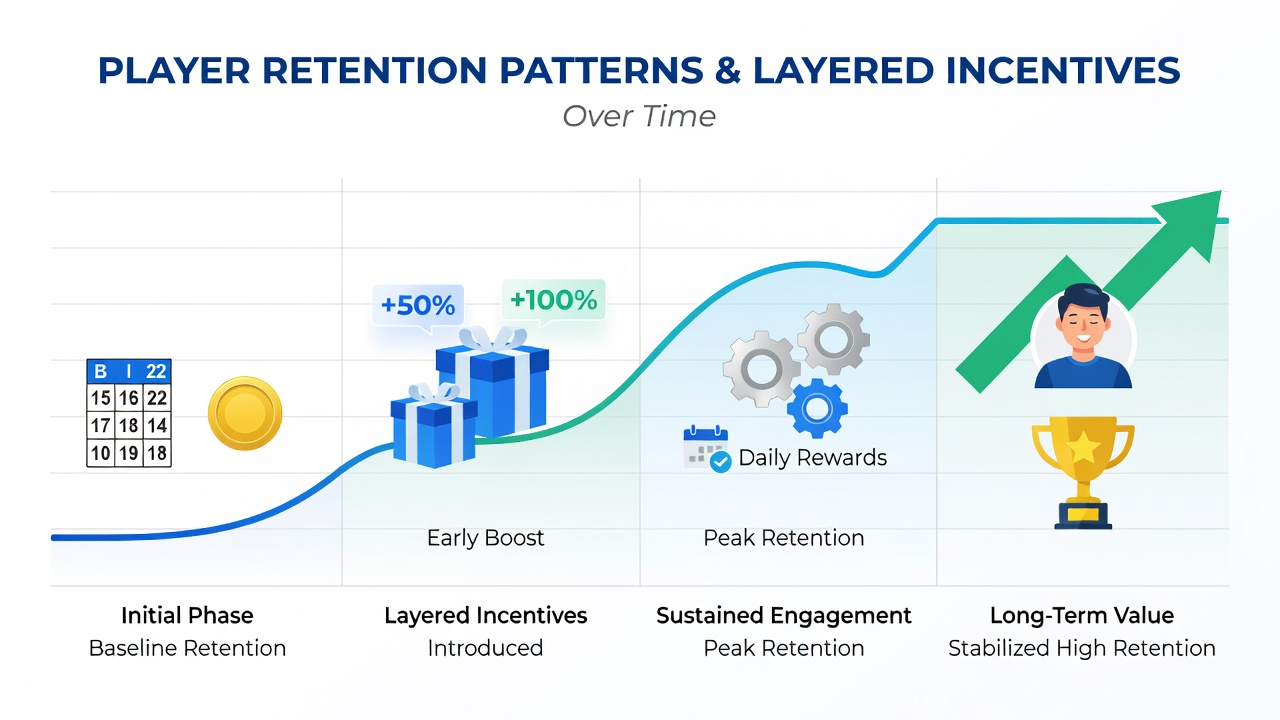
Layered welcome incentives at bingo sites typically consist of staggered rewards that activate across multiple deposits or play sessions rather than a single upfront offer, and researchers tracking these programs note measurable changes in how players return over weeks and months. Data from industry monitoring services shows initial spikes in new registrations when sites launch such structures, yet longer-term patterns reveal shifts in session frequency and deposit consistency once the incentive layers conclude. Observers note that sites rolling out these programs in late 2025 often saw retention rates climb by 12 to 18 percent during the first four weeks, while figures from November 2026 indicate stabilization or slight drops unless follow-on loyalty mechanics were added.
Defining Layered Welcome Structures in Bingo Operations
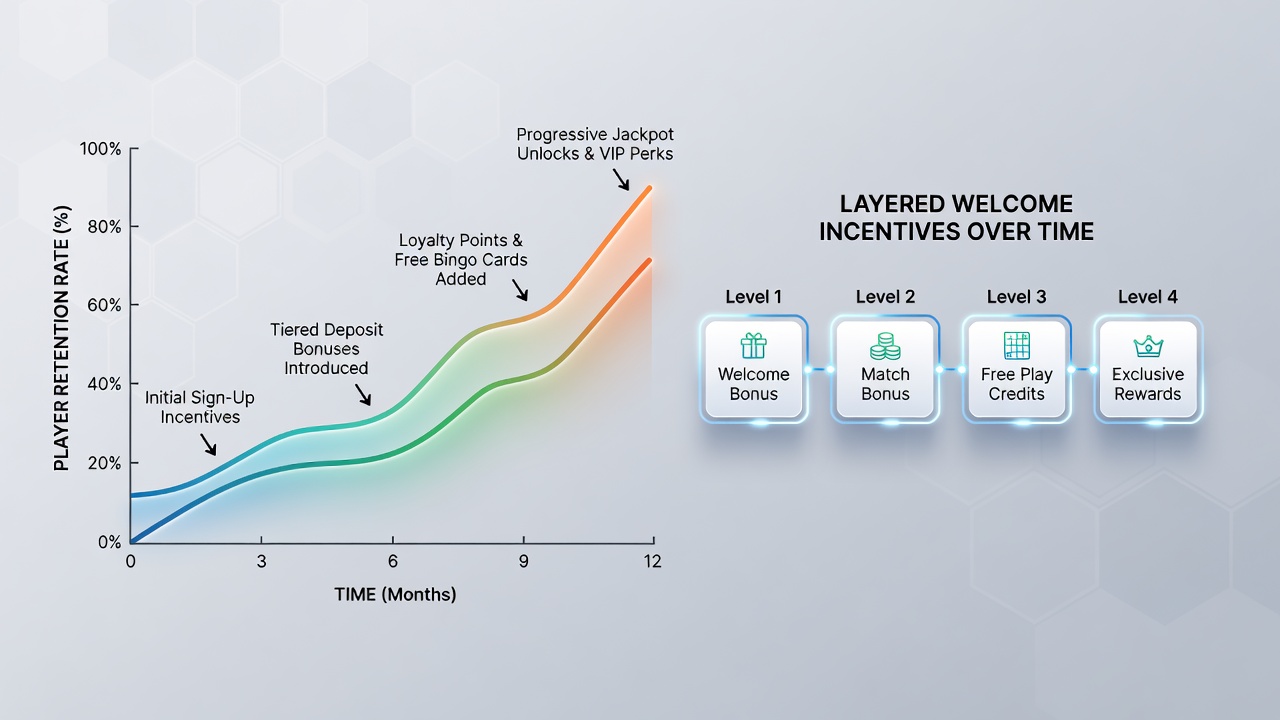
Bingo platforms design layered incentives to distribute value across a sequence of actions, such as a first-deposit match followed by bonus spins on the second deposit and cashback tiers tied to the third. This approach differs from flat bonuses because it encourages repeated visits within a defined window, and analysts examining platform logs find that players who complete all layers demonstrate higher lifetime deposit totals than those who engage only once. Studies compiled by the University of Nevada, Las Vegas Center for Gaming Research reveal that staggered reward schedules correlate with extended play intervals, particularly when the layers incorporate both monetary and non-monetary elements like loyalty points redeemable for bingo tickets.
Early-Stage Retention Responses
During the first month after introduction, bingo sites commonly record elevated login rates as players chase successive layers, and aggregate data indicates average session counts rise from 3.2 to 5.7 per week among new accounts. Those monitoring these metrics point out that the effect concentrates among players who receive clear progress notifications, whereas sites lacking transparent tracking see quicker drop-offs once the initial layer expires. Retention curves in this phase remain steep because the incentive structure creates artificial continuity, yet the same datasets show that 35 percent of participants reduce activity sharply after layer completion unless additional triggers activate automatically.
Medium-Term Pattern Adjustments
Between weeks five and twelve, retention patterns begin to diverge based on how sites manage the transition from welcome layers to standard promotions. Platforms that integrate the final welcome layer with ongoing loyalty programs maintain steadier weekly active user numbers, whereas those that treat layers as standalone events experience a measurable contraction. Research published in the Journal of Gambling Studies examined 14 bingo operators across North America and Europe and documented that sites extending layered logic into month two retained 22 percent more players at the 90-day mark than control groups without such extensions. Figures collected in November 2026 further illustrate that seasonal events, such as holiday-themed bingo rooms, can amplify these effects when timed to overlap with the tail end of welcome sequences.
Influences on Long-Term Engagement
Over six months and beyond, retention hinges on whether layered incentives create habitual play patterns or merely temporary spikes. Data compiled by the Australian Gambling Research Centre indicates that players exposed to four or more sequential layers exhibit deposit frequency 1.8 times higher than single-layer recipients at the half-year point, though variance increases when prize pools remain static. Sites that refresh layer mechanics quarterly tend to sustain flatter retention declines, while those repeating identical structures see cumulative fatigue among returning cohorts. External factors such as competing entertainment options and regulatory changes in deposit limits also intersect with these internal programs, altering how long players remain active after incentives conclude.
Comparative Outcomes Across Markets
Regional differences emerge when bingo sites deploy layered incentives under varying regulatory frameworks. Operators in Canadian provinces with centralized oversight report more consistent retention gains because mandatory responsible gaming tools accompany the reward structures, whereas markets with lighter restrictions show greater volatility in player return rates. One longitudinal review covering operators in three Canadian jurisdictions found that sites pairing layers with mandatory spending caps retained higher percentages of players past the 180-day threshold. Similar patterns appear in European datasets where transparency requirements force clearer communication of incentive terms, reducing confusion that otherwise accelerates churn once layers end.
Conclusion
Retention patterns at bingo sites evolve distinctly when layered welcome incentives replace single-stage offers, with data showing pronounced early gains that require careful management to persist. Continued monitoring through 2026 and beyond will clarify how these structures interact with broader loyalty frameworks and external market pressures. Sites that treat layers as entry points into sustained engagement systems rather than isolated campaigns demonstrate more stable long-term user bases according to available operational records and academic analyses.